GitHub is your new design asset library.
Designers collect references. Screenshots, videos, links, and rather full Figma pages of things that might become useful someday.
The problem usually starts one step later.
You find a great shader, an unusual interaction or a 3D effect and know pretty precisely how it could work in your own project. You still can't build it. So the reference ends up in the moodboard, and the product ends up with a slightly more ambitious CSS animation.
That boundary is shifting right now.
With coding agents, GitHub becomes accessible to designers too. Not as a place where you suddenly have to study software engineering. But as a library of design that already works.
No static assets. Executable ideas.
More workshop than library
GitHub is, of course, not an asset library in the classic sense. There is no neatly curated selection and no download button for "Chrome Effect, final, really final".
Instead, you find experiments, libraries and tools that other people have built and made publicly available. Some are production-ready. Others consist of a single good thought and a surprising amount of mathematics.
You used to have to understand the code before you could work with it. Today, a coding agent can read the repository, explain the structure, install dependencies and port a first prototype into your own project.
Above all, that changes the beginning.
Instead of simplifying a complex idea early out of fear of the implementation, you can try it first. In the browser, with real behavior, inside the actual design.
Four examples.
01 — ShaderGradient
ShaderGradient creates animated 3D gradients for React. Shape, colors, light, motion and perspective are controlled via parameters. There are integrations for Figma and Framer as well.
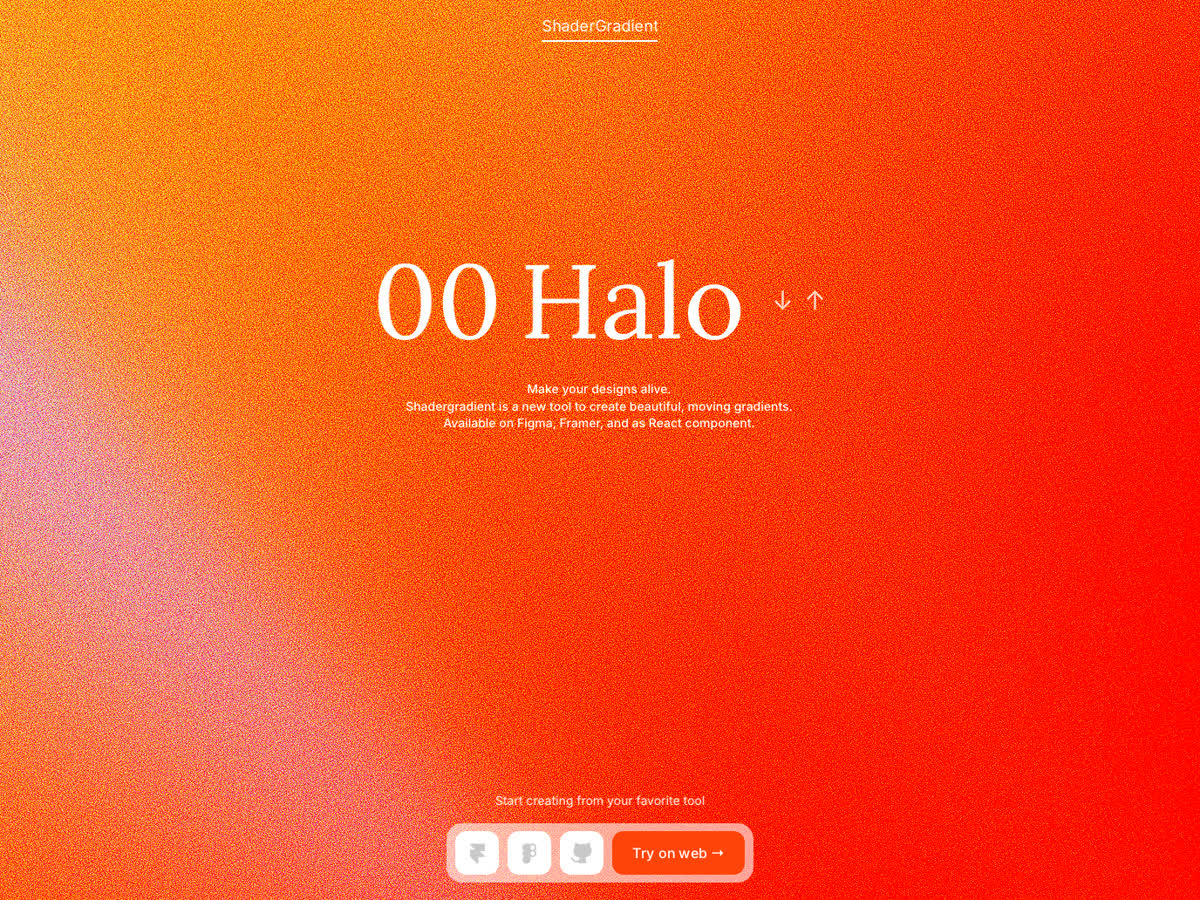
At first that sounds like a better gradient tool. In fact, it's a good entry into a world that has been closed to many designers so far: shaders.
You don't have to start from zero, and you don't have to understand every calculation running in the background. You can start from a working foundation, change values and watch how the visual system behaves.
The difference to the classic asset: you don't adopt a finished image. You adopt a logic.
02 — Liquid Logo
Liquid Logo by Paper Design turns a wordmark or a symbol into liquid metal.
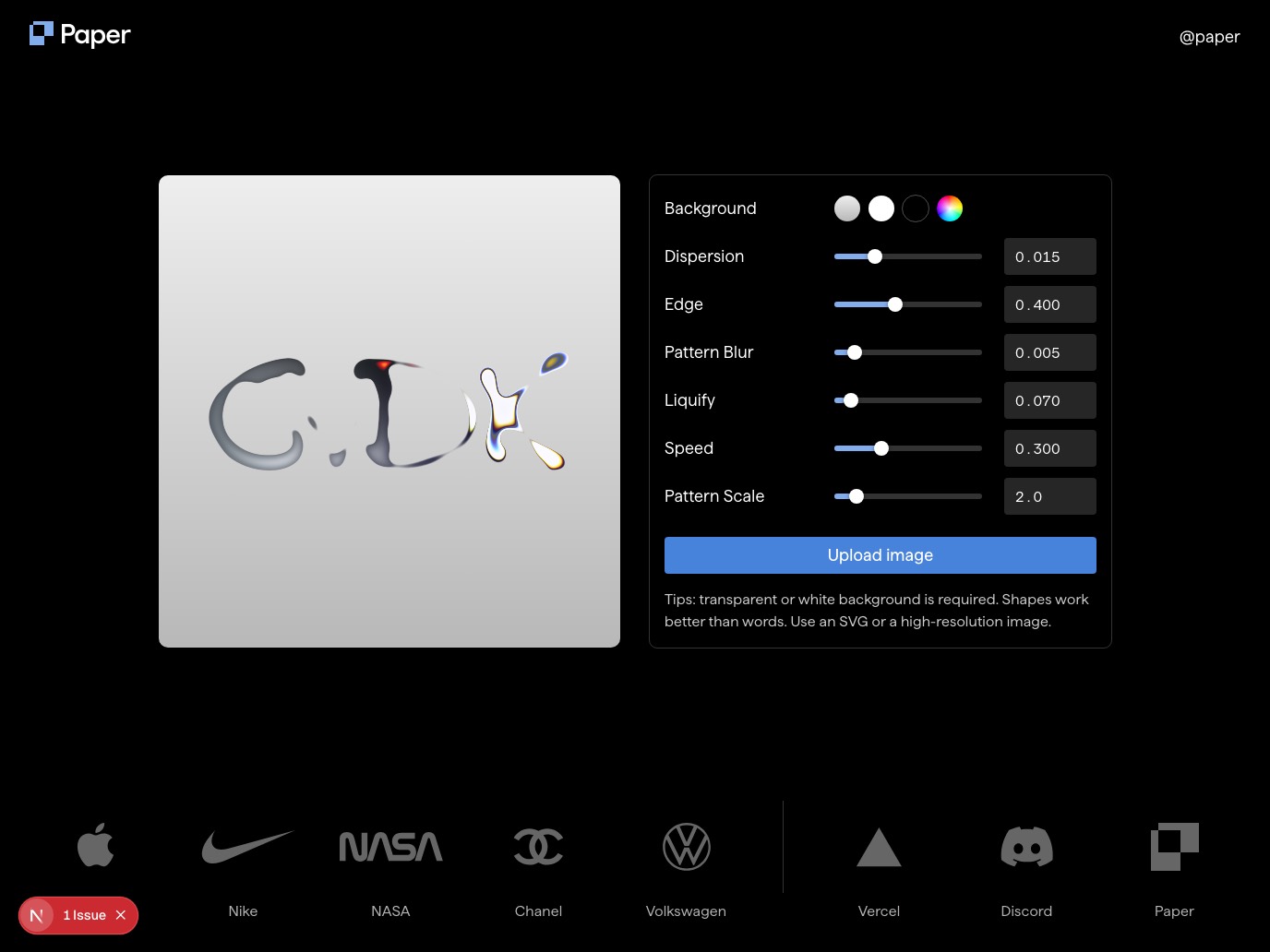
The repository is less a universal library than a very good visual experiment. And that is exactly why it belongs on this list.
You can save the effect as a reference. Or you take it apart, swap the logo, change material and motion, and see whether something of your own emerges.
Not every idea has to become a product feature. Sometimes a working prototype is enough to see a brand differently for a moment.
03 — Liquid Glass JS
Liquid Glass JS brings Apple-inspired glass effects to the browser. The library works with WebGL and produces refraction, blur and masking in real time. Shape, radius and tint can be changed.
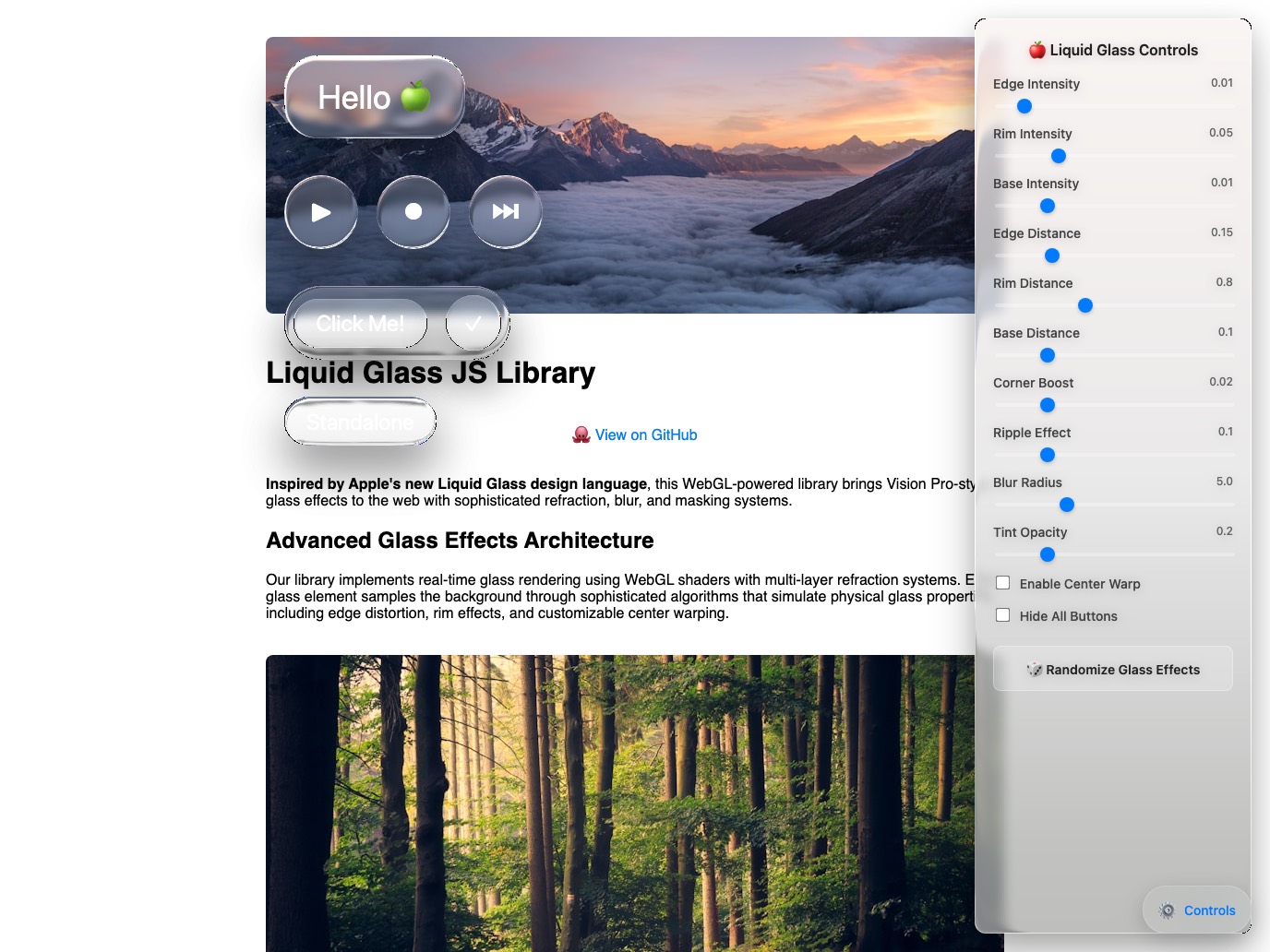
But the example also shows why GitHub is not a free candy store.
The repository is young and currently consists of a single commit. Accessibility, performance optimization and better support for mobile interaction are still on the roadmap. That makes it interesting for experiments, but not automatically ready for the next big product launch.
A running effect is not yet a dependable interface.
04 — React Three Fiber
React Three Fiber is a different order of magnitude. It is not a single effect but a React renderer for Three.js.
It lets you build three-dimensional scenes, materials, animations and interactions as React components. The project effectively opens the entire Three.js ecosystem to React and ships a large selection of helper tools on top.
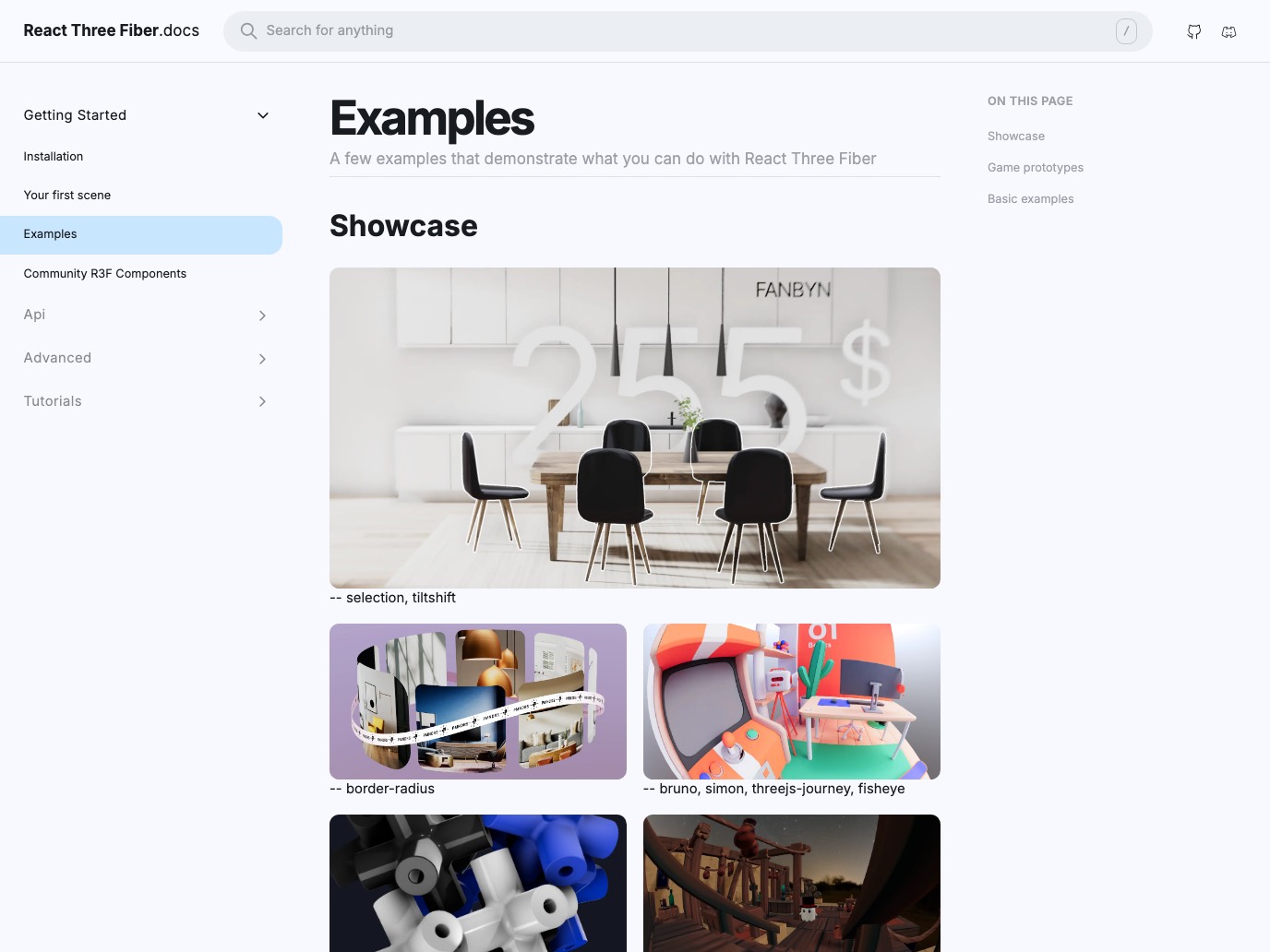
That can be a floating product model. A spatial navigation. A data visualization. Or a website that no longer feels like a sequence of flat rectangles.
A coding agent lowers the entry barrier considerably. But it doesn't replace an understanding of scene, camera, light, material and performance. Even the official documentation recommends getting familiar with React and Three.js first.
The tools become more accessible. The design decisions don't automatically get better.
Finding is the new core skill
That's why the interesting part doesn't start with the prompt. It starts with the search.
Which effect do I actually need? Is there a library, a shader or a well-documented experiment for it? When was the project last updated? Are there open issues? Does it work with my technical setup? And am I even allowed to use it?
A public repository is not automatically free to use. Without a license, standard copyright applies. Others may view and fork the code on GitHub, but not automatically adopt, modify or redistribute it. GitHub explains this difference in its documentation on repository licenses.
Even an MIT license doesn't answer every question. Dependencies, browser support, accessibility and performance remain part of the work. GitHub's dependency graph, for example, can surface license information and known security vulnerabilities in included packages.
The five minutes before copying usually matter more than the prompt after.
This is not copy and paste
The worst application would be to throw every found library onto a website unchanged. Soon all products would look like the same collection of popular GitHub repositories.
The value doesn't lie in the effect itself. It lies in the ability to test it early and develop it further as a designer.
Does the motion fit the brand? Does it work on a smaller device? Does the content stay accessible? Is the effect still convincing the tenth time you see it? And does it contribute something to the product — or does it merely prove that someone managed to install WebGL?
Coding agents take over a larger share of the technical translation. Designers don't gain a free pass — they gain a larger decision space.
To me this is one of the most meaningful forms of vibe coding: a visual idea no longer has to end as a screenshot. It can become a working prototype within a few hours.
After that, the real work begins.
Selecting. Changing. Leaving out. And turning the found material into something that no longer looks like a find.
GitHub is the new design asset library.
The assets just aren't finished.